Romania on the AI Value Chain: Advantages and Opportunities
Romania's AI advantages lie at the two ends of the value chain: low-carbon power and compute upstream, and strong integration capacity alongside a large unserved adoption market downstream.

Romania's AI advantages lie at the two ends of the value chain: low-carbon power and compute upstream, and strong integration capacity alongside a large unserved adoption market downstream.

Enlargement used to be a project of completing Europe; it is now a project of protecting it. Twenty years of data show the effort pays off — and today’s candidates start where Romania and Bulgaria stood in 2007.

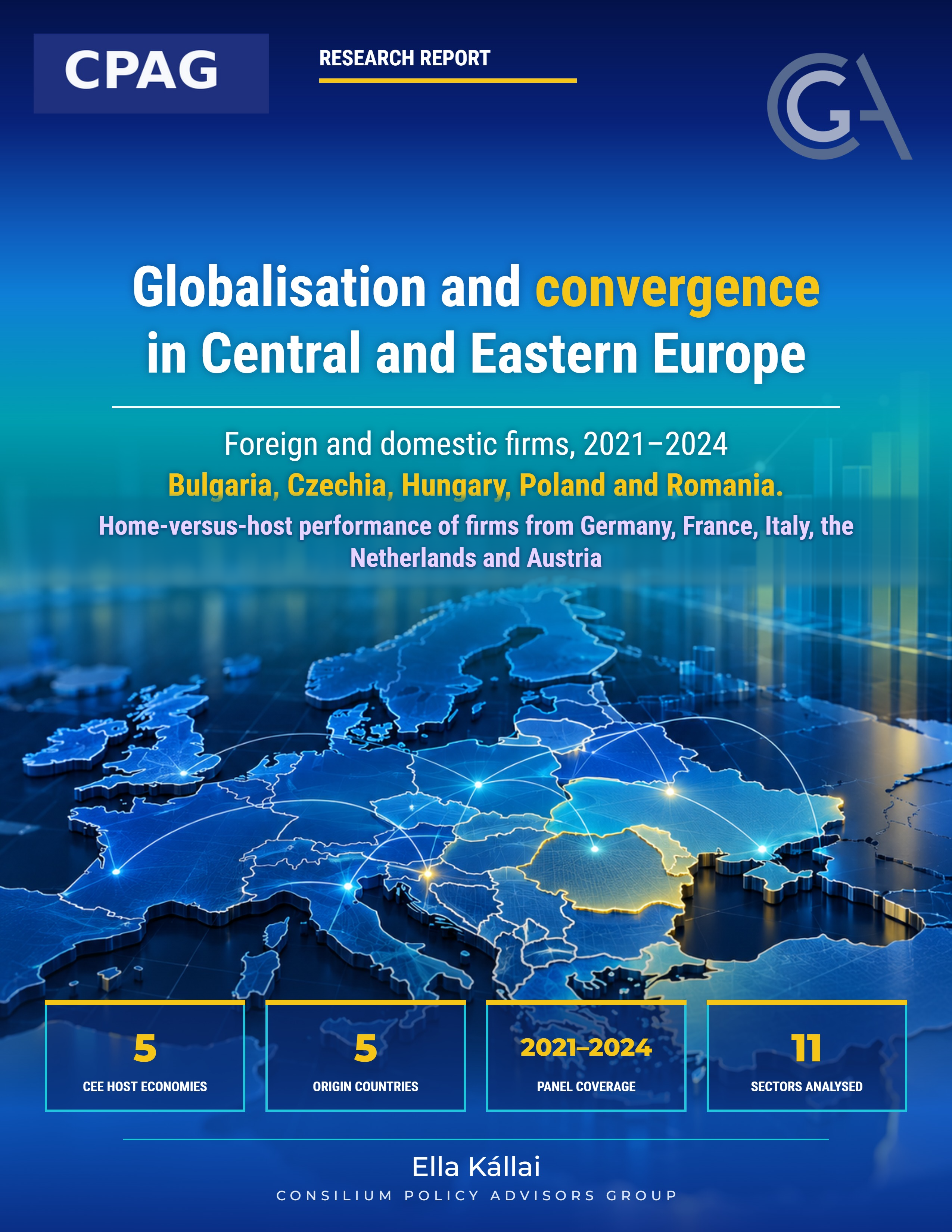
A comparative study of foreign and domestic firms across Bulgaria, Czechia, Hungary, Poland and Romania, examining convergence, productivity and sectoral performance between 2021 and 2024.

The September 2026 edition of CPAG's Macro Risks Report updates Romania's economic outlook as GDP contracts, inflation remains elevated, and fiscal and external imbalances continue to weigh on the economy. It assesses the latest developments in growth, prices, monetary policy, employment, public debt, and the exchange rate.

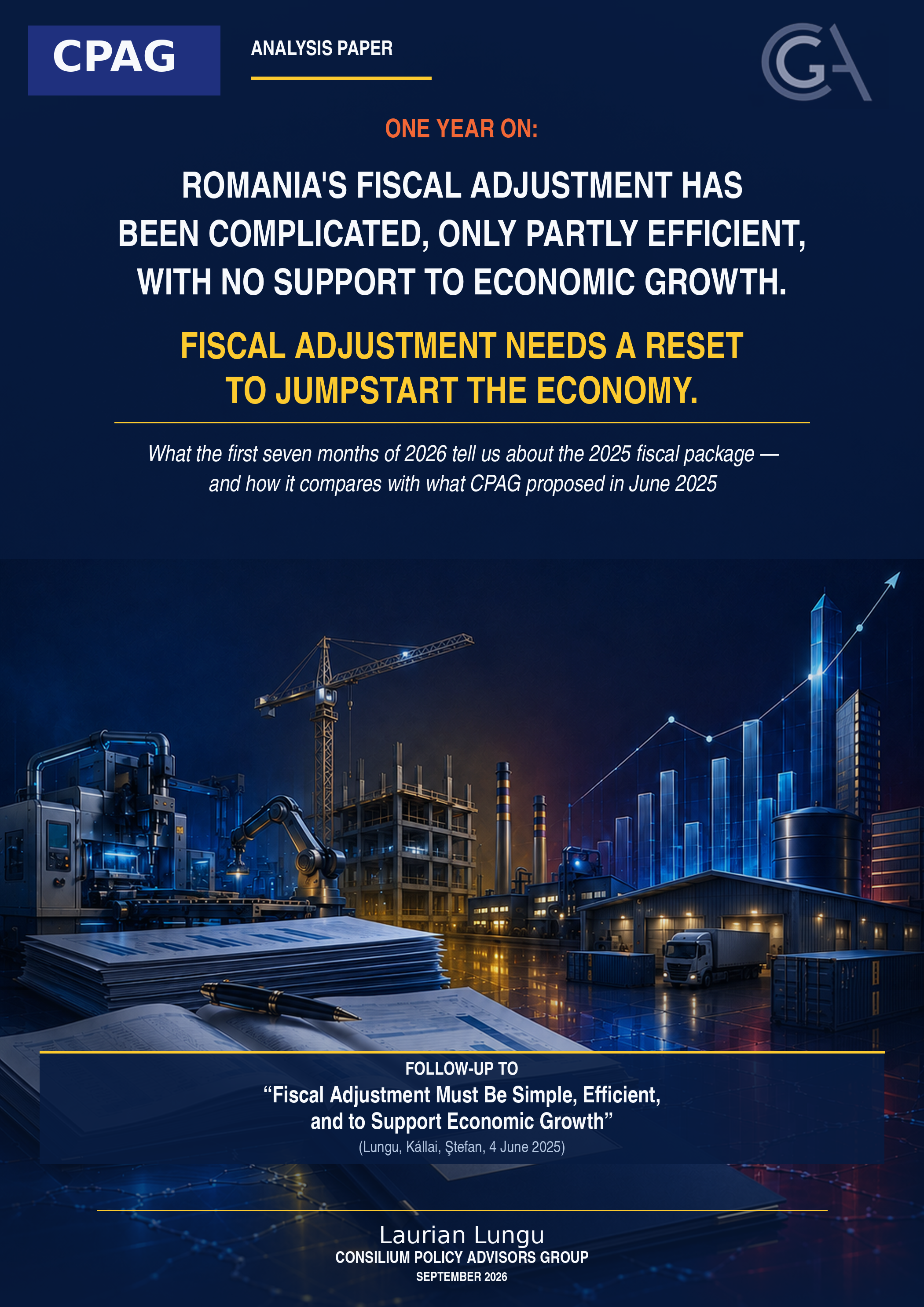
Romania’s fiscal adjustment has been complicated, only partly efficient, and has provided no support to economic growth. The first seven months of 2026 show why the 2025 fiscal package needs a reset to jumpstart the economy, compared with what CPAG proposed in June 2025.

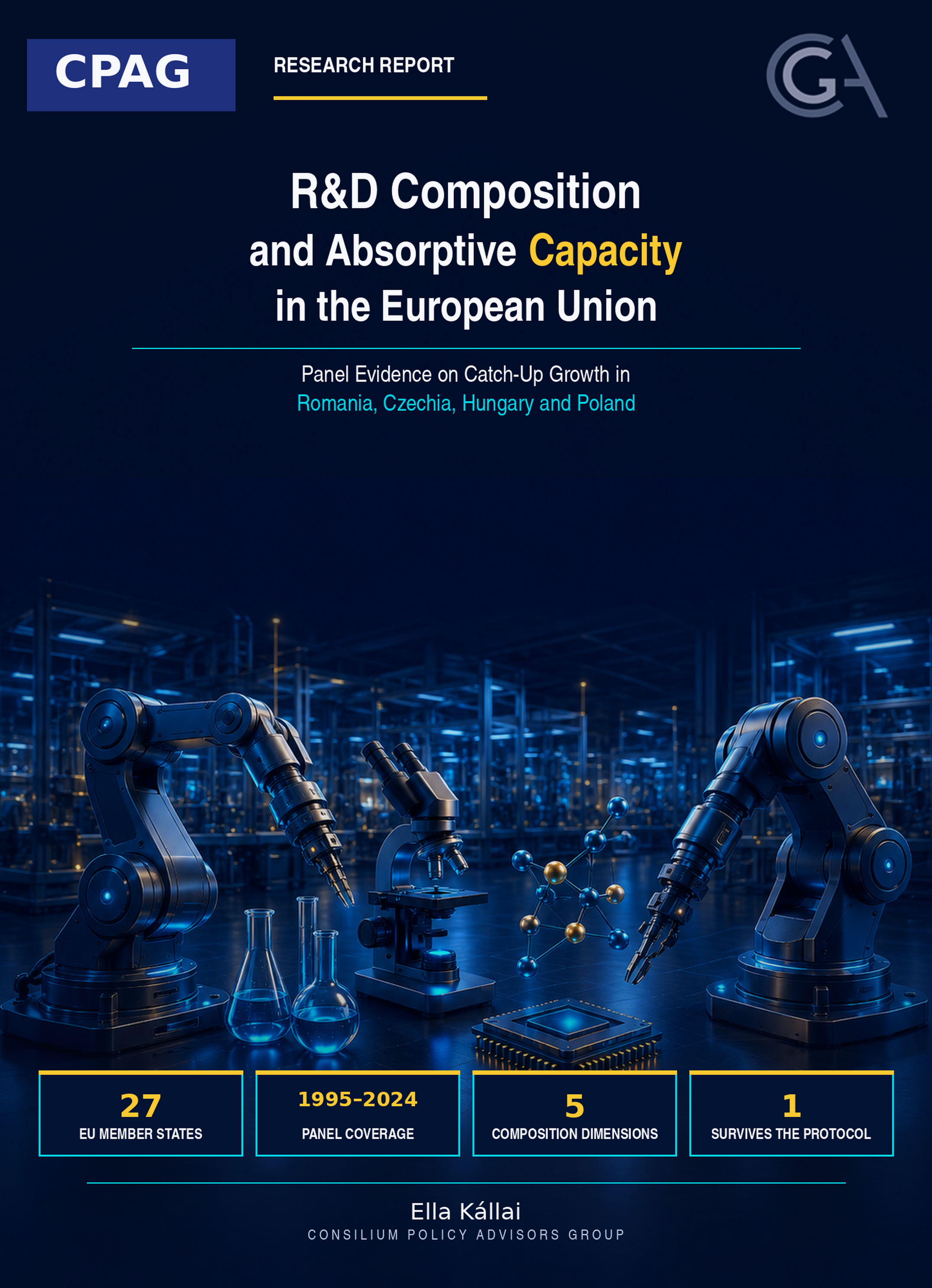
Panel evidence from all 27 EU member states over 1995–2024 shows that, among five dimensions of R&D composition, only the capital-versus-current expenditure split survives the full robustness protocol. The association with faster productivity catch-up is concentrated in economies far from the EU frontier.

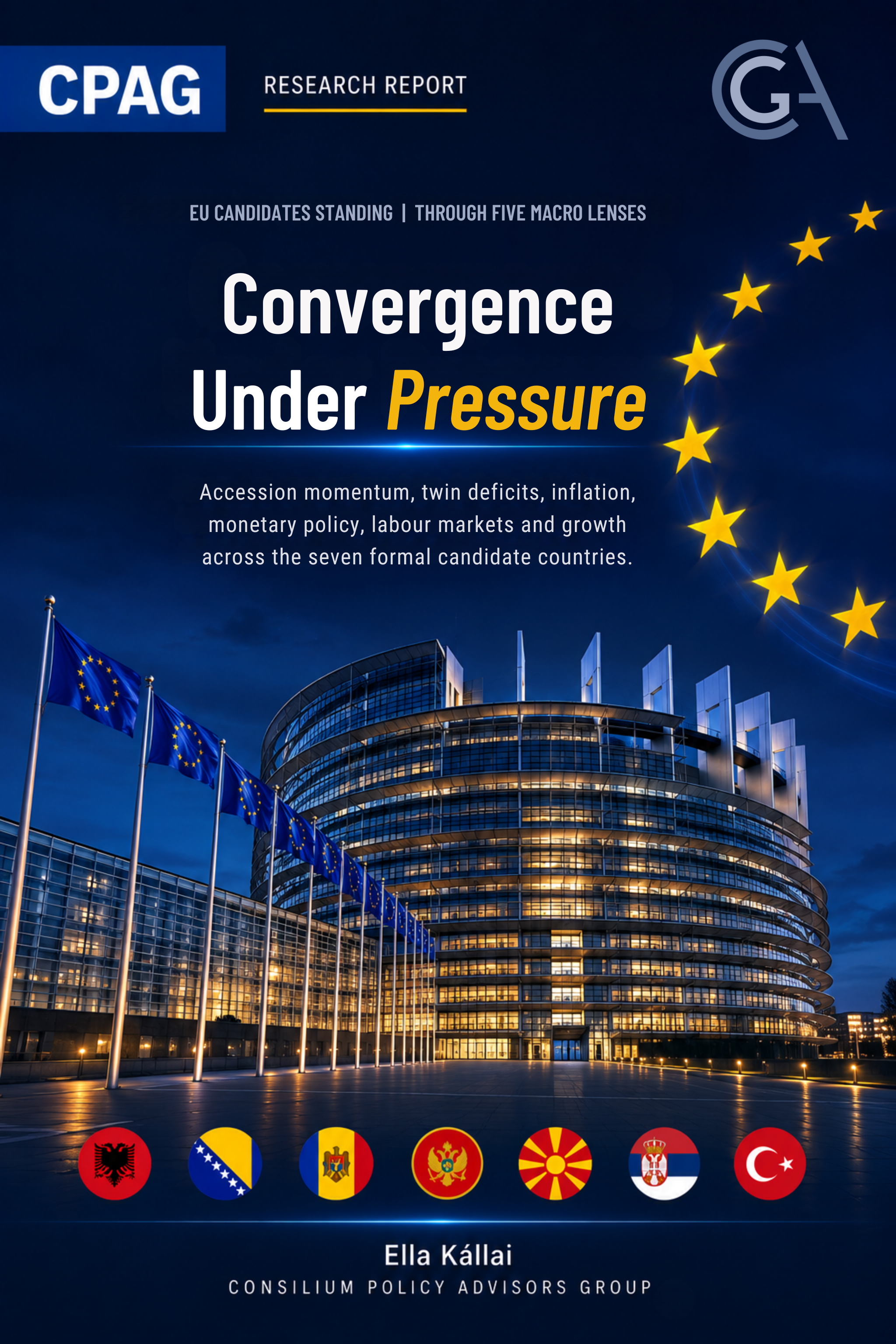
An assessment of accession momentum, twin deficits, inflation, monetary policy, labour markets, and growth across the seven formal EU candidate countries, distinguishing economic convergence from political and negotiating readiness.

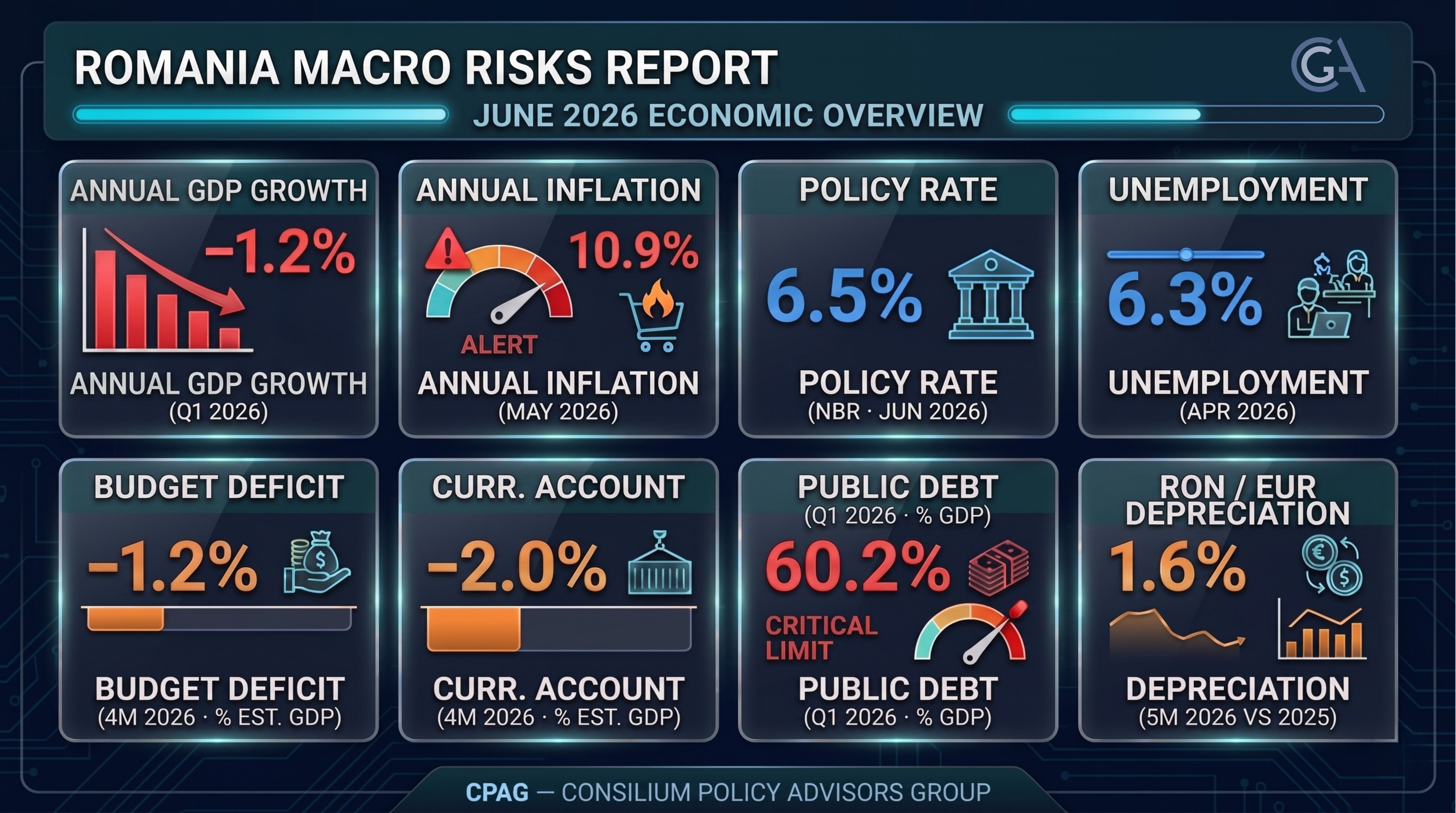
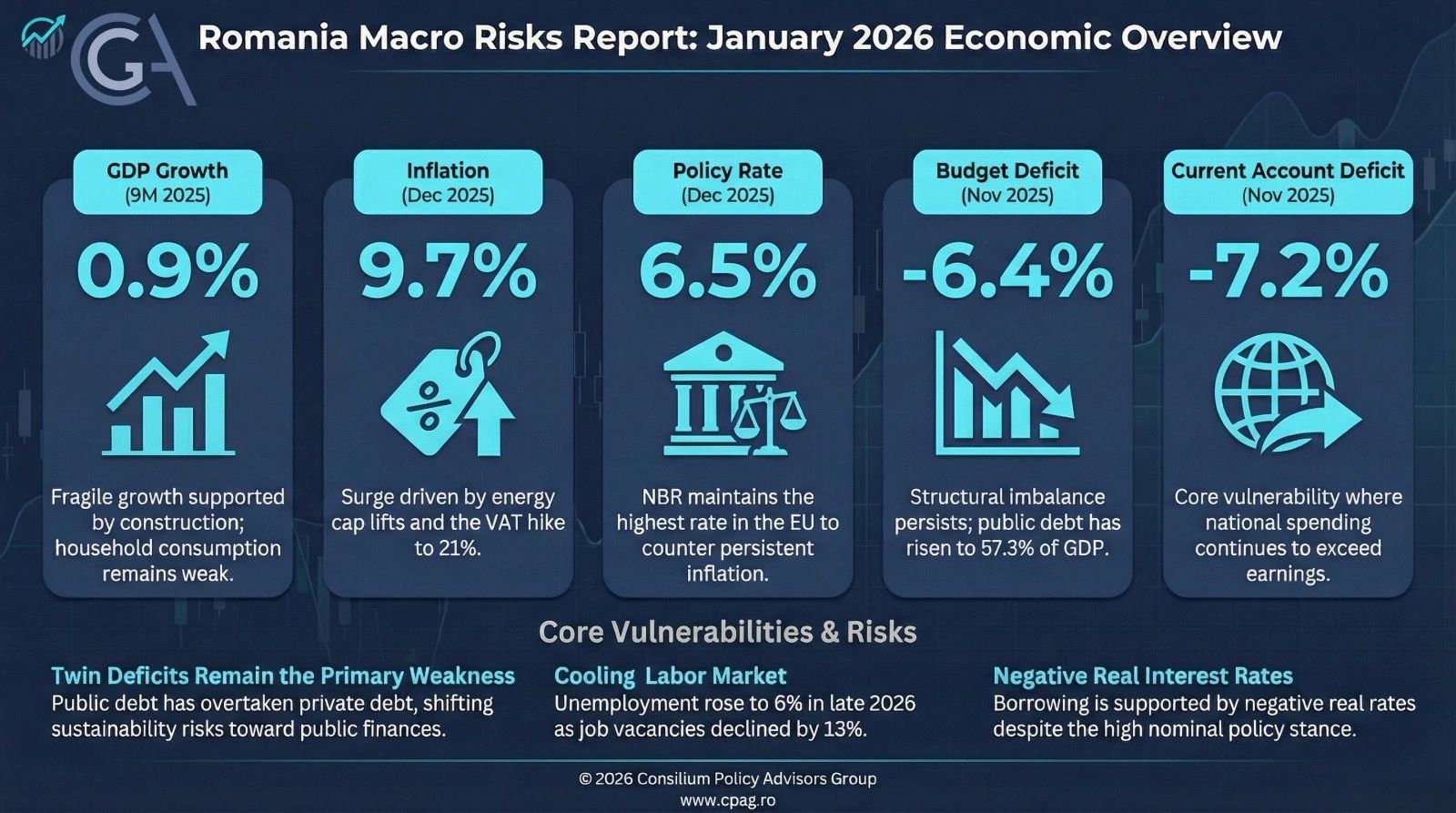
The June 2026 edition of CPAG's Macro Risks Report updates Romania's macroeconomic risk assessment, with a focus on fiscal pressures, inflation dynamics, financing conditions, and growth vulnerabilities. It places Romania in a regional context and assesses how fiscal consolidation and external uncertainty shape the near-term outlook. The report also examines labour-market signals, external balances, public-debt dynamics, and the policy constraints facing Romania through the remainder of the year.

A data-driven analysis of Romania's political instability, cabinet turnover, and legislative volatility between 2011 and 2026, highlighting the mismatch between short-lived governments and long-term reform horizons. It examines the economic cost of repeated institutional resets and the difficulty of sustaining coherent reforms.

An analysis of how trade in high-technology goods and services drives technology diffusion across EU member states, with implications for productivity convergence and industrial policy. The report compares frontier and follower economies and identifies policy levers that could restart the diffusion process after 2019.

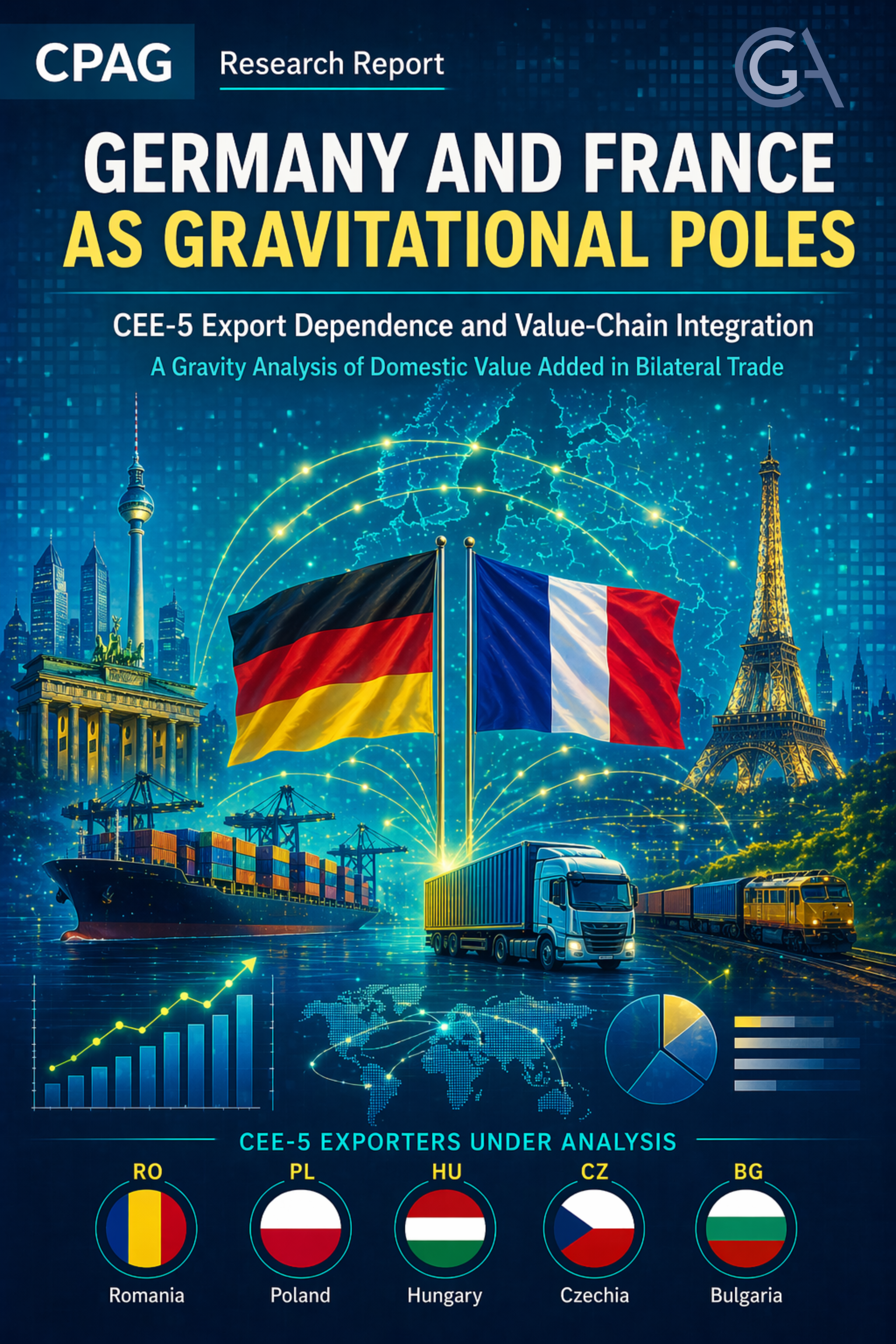
An analysis of Germany and France as economic gravitational poles, with implications for trade, investment, and convergence across Europe.

An analysis of Romania's youth transition between education and employment, focusing on NEETs and the frictions between the educational system and the labour market. The report maps gender, education, and regional gaps and proposes policy routes for smoother school-to-work transitions.

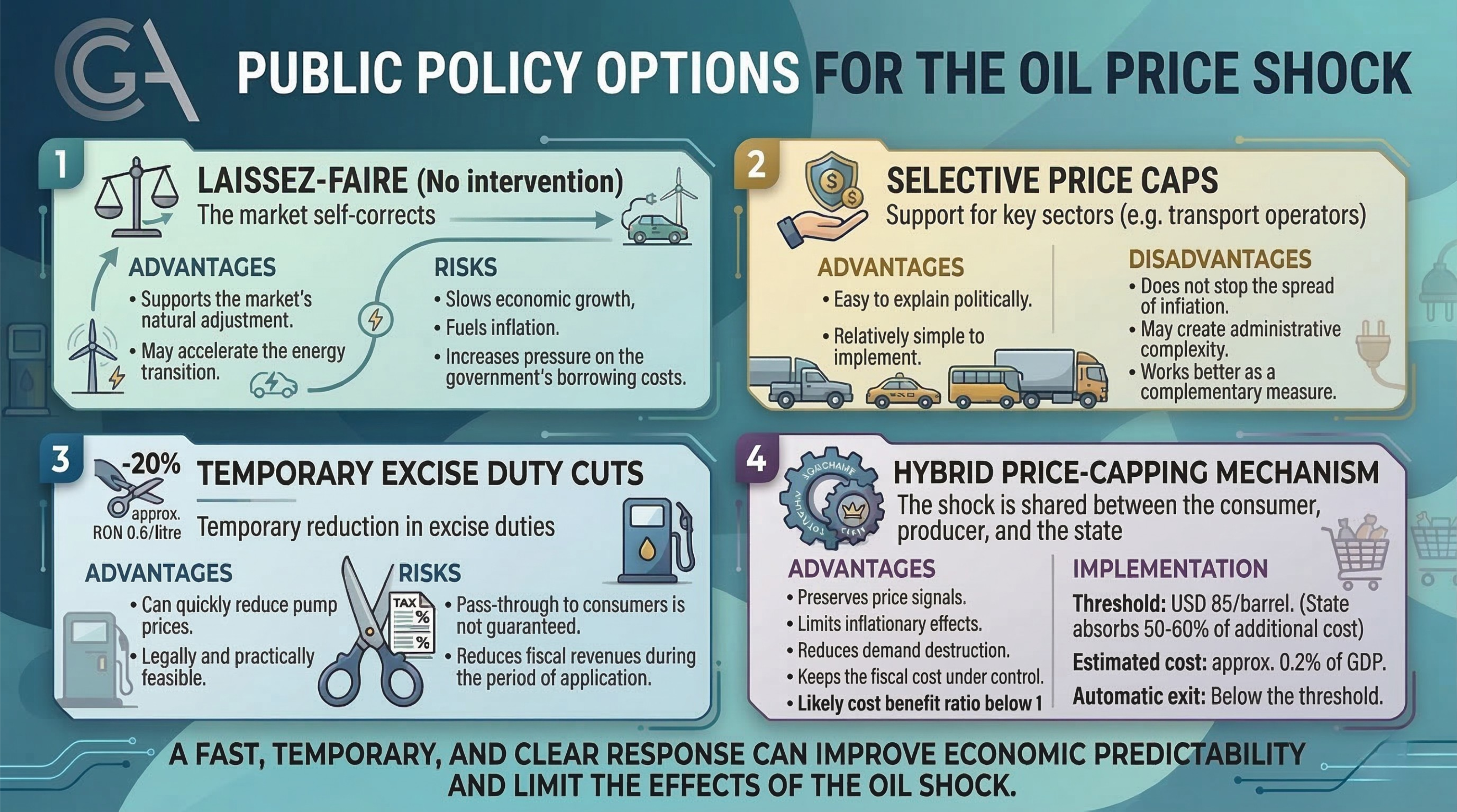
Policy options for Romania in the context of oil-price shocks, inflation risks, and fiscal trade-offs.

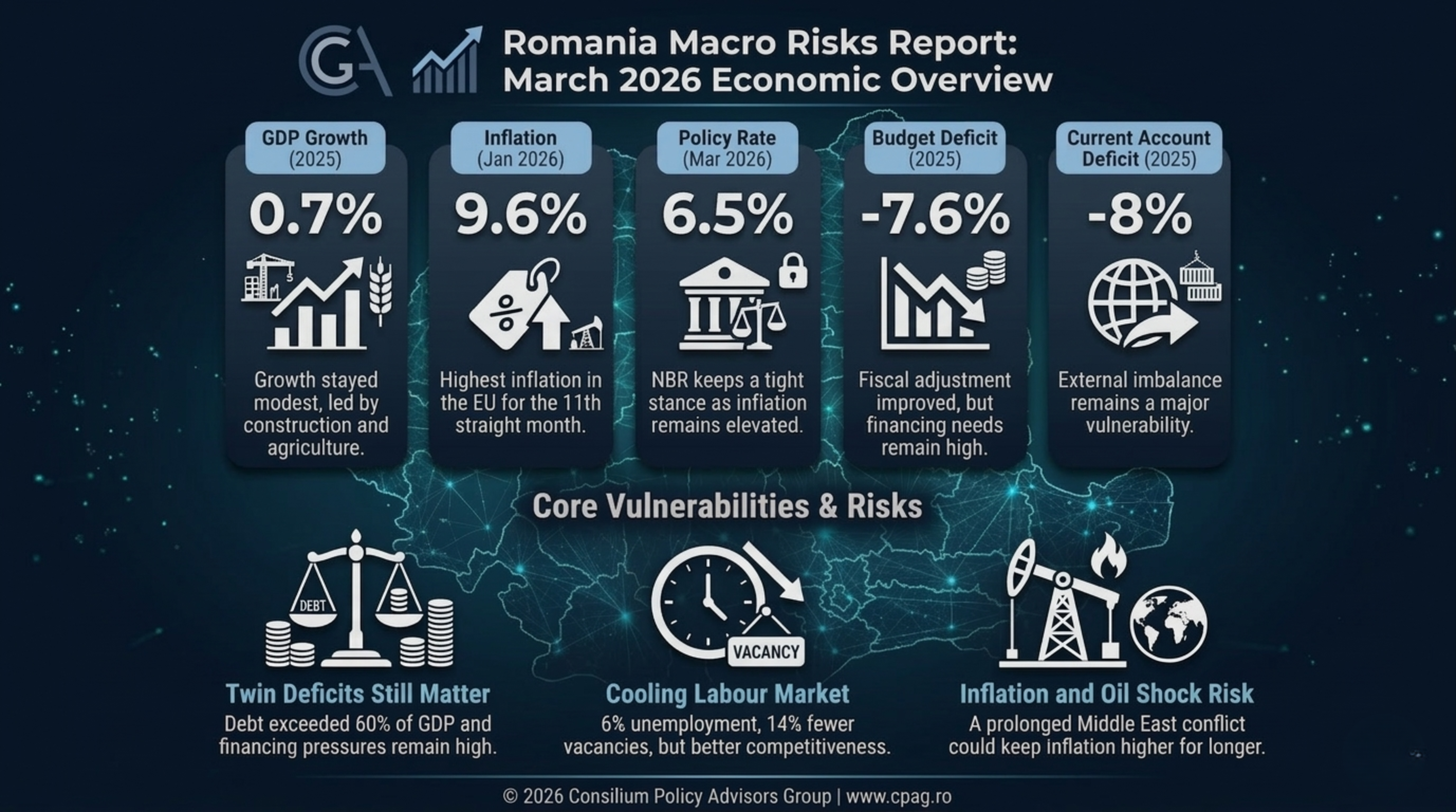
The March update tracks fiscal adjustment, inflation persistence, financing needs, and growth risks for Romania.

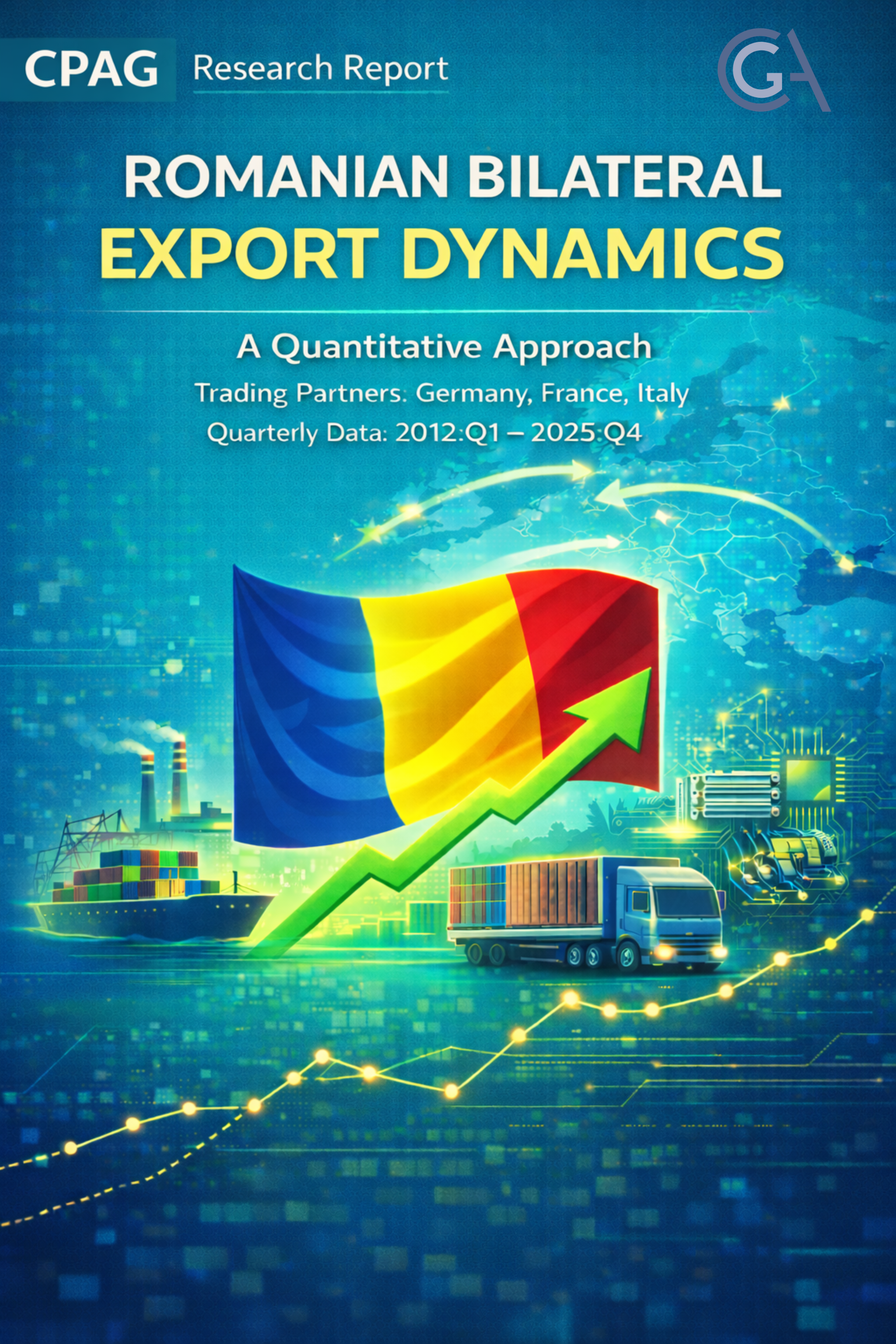
A quantitative assessment of Romania's export dynamics with Germany, France, and Italy using quarterly data.

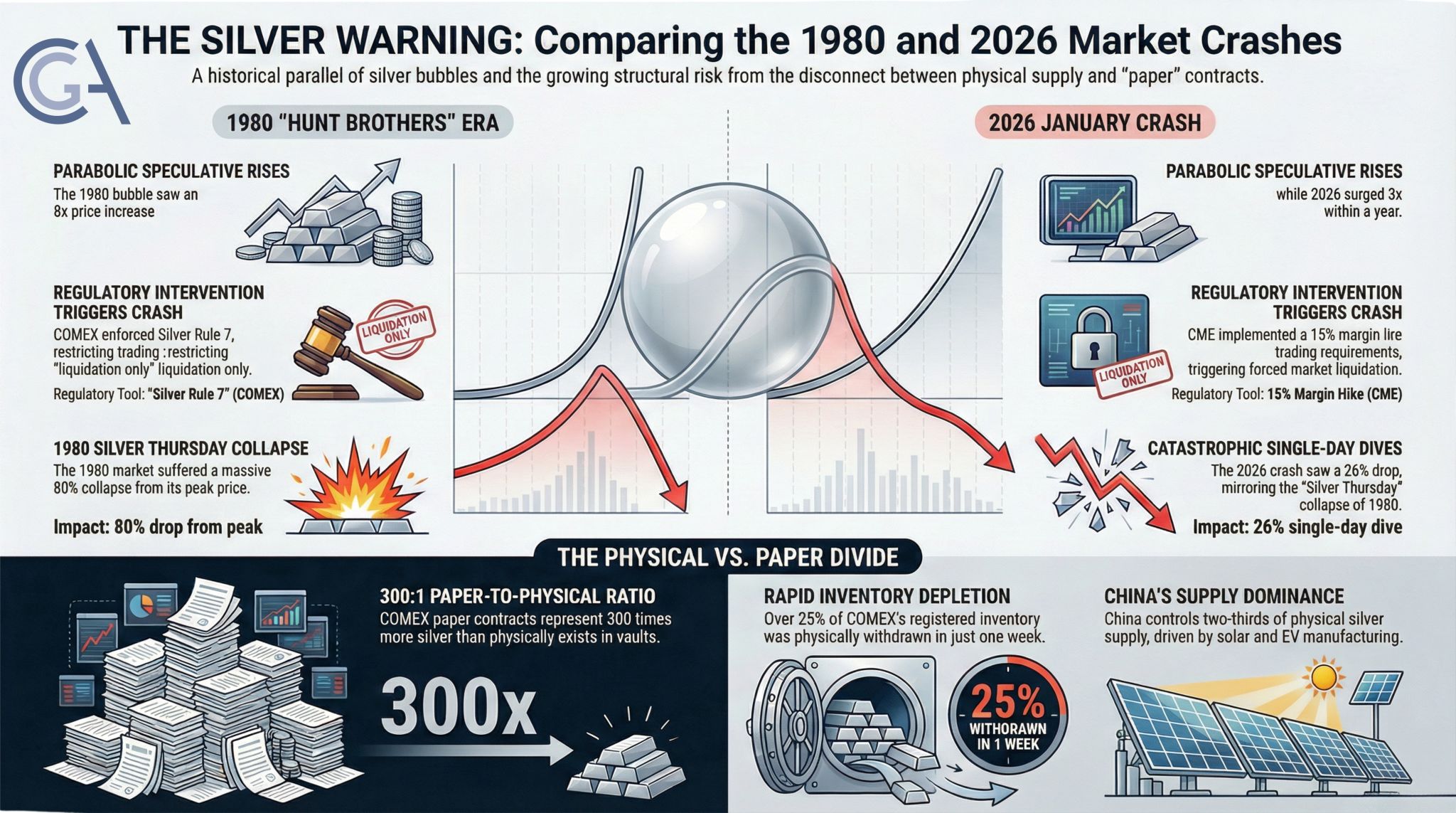
An article on silver price dynamics and their broader implications for inflation, markets, and the economy.

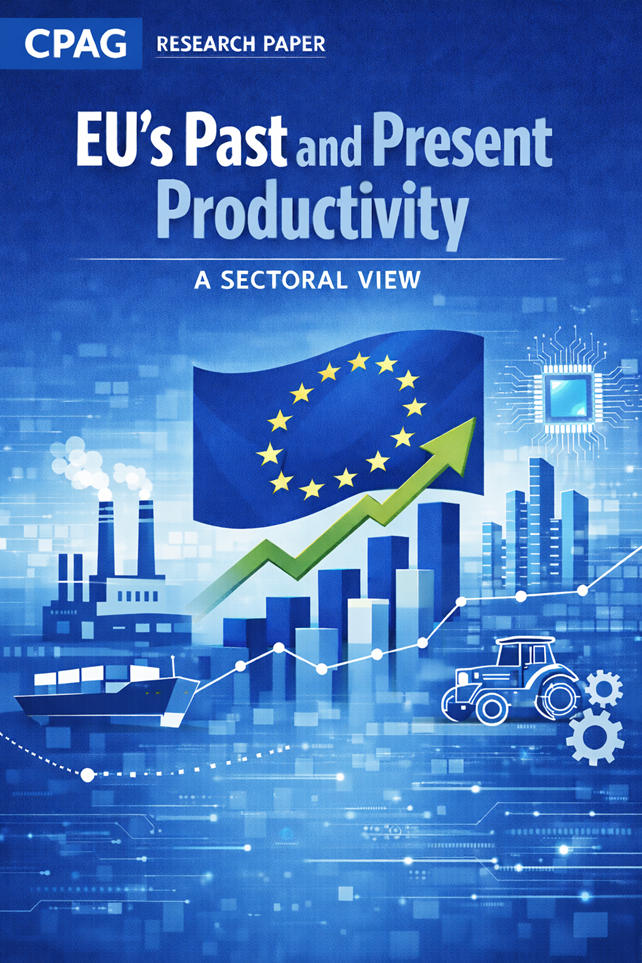
A sectoral view of EU productivity dynamics and the slowdown in productivity diffusion after 2019.

A macro risk snapshot focused on twin deficits, financing conditions, inflation, and Romania's near-term outlook.

CPAG analysis examining the economic implications and policy options linked to the topic.

A policy note on fiscal adjustment options that support consolidation while protecting economic growth.

An analysis of regional purchasing power, social cohesion, and electoral outcomes in Romania.
CPAG report with applied analysis, data, and policy conclusions on Romania's economy and the European context.